
The International Order between Unipolarity and Multipolarity
A paper Dr. Mustafa Osman Ismail presented at the 7th academic conference of the Arab Association of Political Science in Cairo. It argues that the world is not completing a transition from unipolarity to multipolarity but living through a “restorative multipolarity” that redistributes influence inside the structure that produced hegemony, and traces what that means for the Arab region.
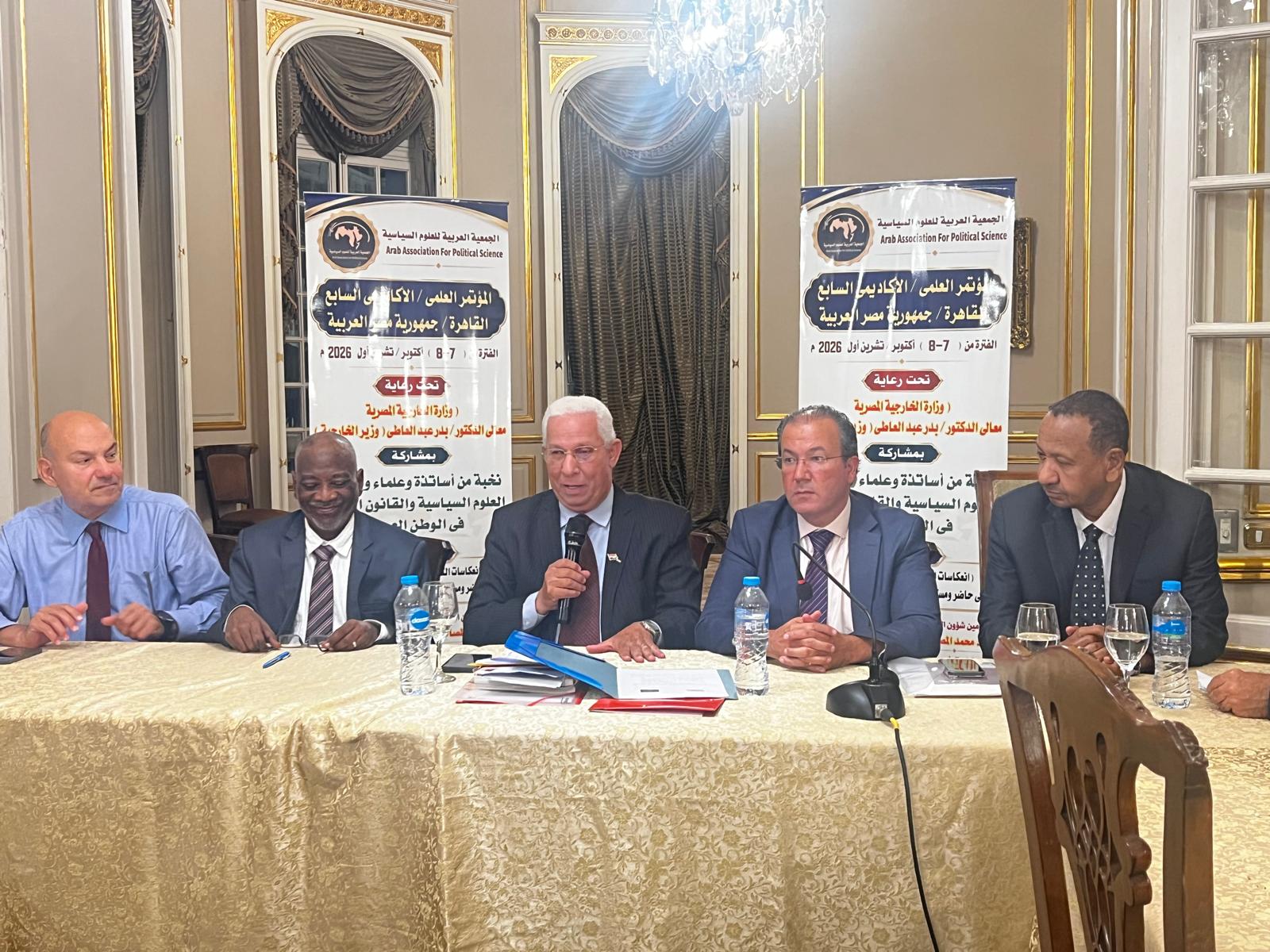
7–8 October 2026
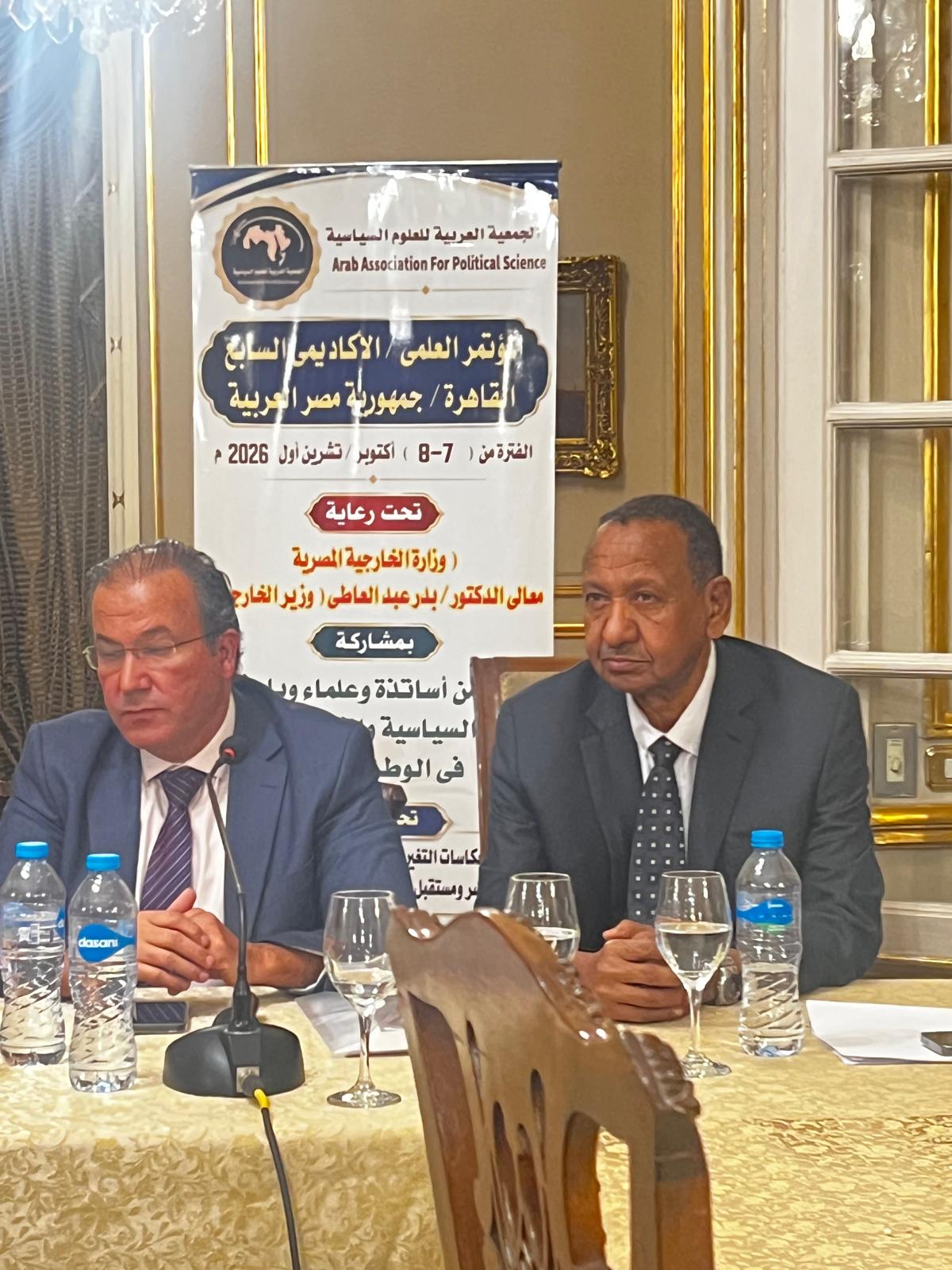
Prof. Dr. Mustafa Osman Ismail Elamin, professor at Hamad Bin Khalifa University and Sudan's former Foreign Minister, took part in the 7th academic conference of the Arab Association of Political Science in Cairo, held at the Egyptian Diplomatic Club under the patronage of Egypt's Foreign Minister Dr. Badr Abdelatty on 7–8 October 2026. He presented a paper titled “The International Order between Unipolarity and Multipolarity” in the conference's first track, on the structural shifts in the world order.
The session in which Dr. Mustafa presented his paper was chaired by the Arab thinker and former Egyptian minister Prof. Ali El-Din Hilal, and the paper drew wide discussion from participants and specialists in international relations. Below is the paper's abstract in English; the full text, with its references, is published on the Arabic edition of this page.
Abstract
The paper starts from one central question: why has the unipolar order not ended, despite all the talk of a multipolar world? It argues that what is happening in today's international system is not a completed historical transition from unipolarity to a new multipolarity. It is a hybrid, restorative multipolarity: an effort to redistribute the instruments of influence inside the very structure that produced unipolar hegemony, without a real break from its intellectual, institutional and security foundations. From the “Washington Consensus” to the “Beijing Consensus,” through security and military approaches, to patterns of re-colonisation, settlement and technological supremacy, the alternatives on offer look more like modified versions of the old order than the foundation of a fairer, more balanced one.
The paper holds that today's international crises reveal not only the decline of American unipolarity but also the inability of the rising alternatives to move beyond the logic of hegemony itself. That makes the current multipolarity incomplete, a patchwork unable to build a new international legitimacy. The paper then traces what this shifting structure means for the Arab region, one of the arenas most exposed to unipolar logic in multipolar dress: foreign interventions, reshaped alliances, the securitisation of politics, unequal sovereignty, and dependency reproduced in the economy, in knowledge and in political discourse.
It concludes that the Arab region faces not a stable multipolar order but a turbulent transition, in which the remnants of unipolarity coexist with a restorative multipolarity unable to offer an alternative global horizon. The way out is not better terms of adaptation to the existing order. It is to help shape a new international vision that avoids the ills of unipolarity and rests on justice, civilisational plurality, human dignity and parity among actors, opening a path beyond the mere rotation of hegemony among the great powers.
Keywords: international order; unipolarity; restorative multipolarity; the Arab region; international hegemony.