
From Khartoum to the World: Dr. Malik Badri and the Birth of Contemporary Islamic Psychology
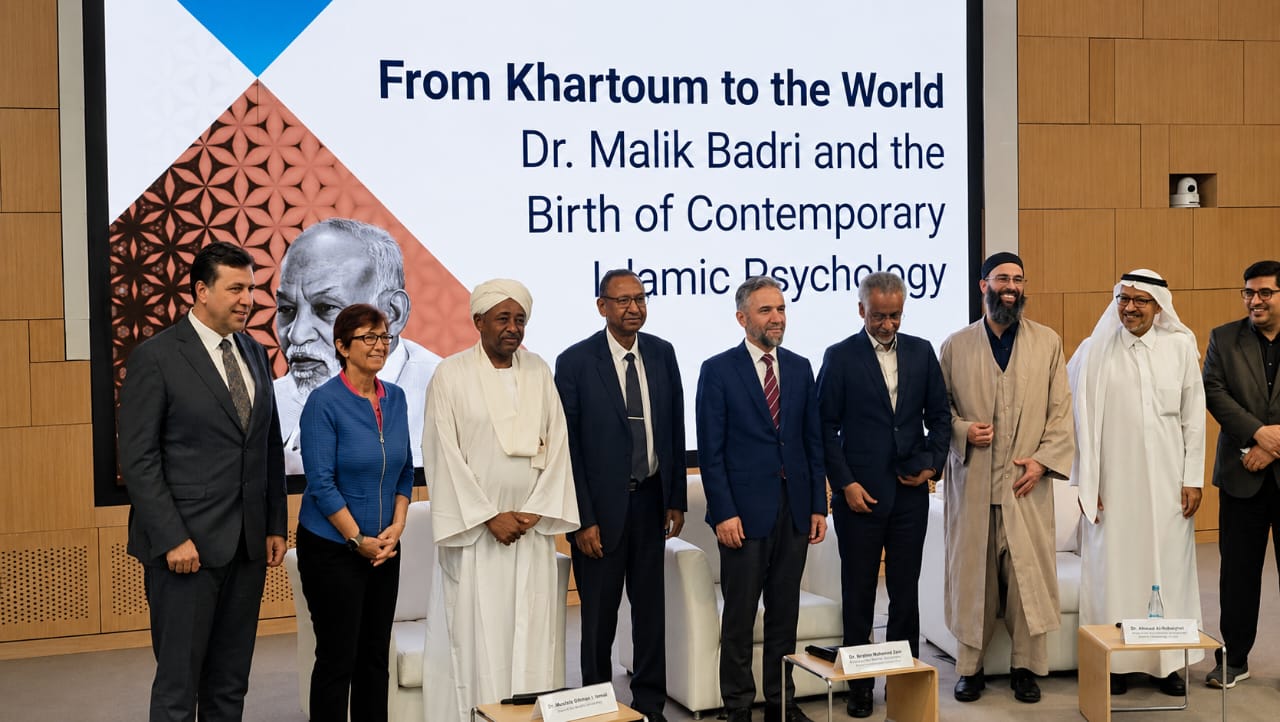
The Islam & Global Affairs programme at the College of Islamic Studies, Hamad Bin Khalifa University, held a public lecture on the life, thought and legacy of Dr. Malik Badri and his part in founding contemporary Islamic psychology. Dr. Mustafa Osman Ismail Elamin moderated the discussion.
2 September 2026
In a distinguished intellectual and academic tribute, the Islam & Global Affairs programme at the College of Islamic Studies, Hamad Bin Khalifa University, held a public lecture on the life, thought and legacy of Dr. Malik Badri — among the foremost Sudanese scholars to have contributed to the founding and development of contemporary Islamic psychology.
The lecture traced Dr. Malik Badri’s scholarly and intellectual journey and his pioneering contribution in setting out an authentically Islamic vision of psychology — one that reached beyond Sudan and the Arab world to leave a global mark on psychological studies and on contemporary Islamic thought.
The discussion was moderated by Dr. Mustafa Osman Ismail Elamin, Director of the Islam & Global Affairs programme and Professor of Islam and Global Affairs at the College of Islamic Studies, Hamad Bin Khalifa University.
Taking part in the lecture were Dr. Ibrahim Mohamed Zein Abdelwahid, Professor of Islamic Studies and Comparative Religion at the College of Islamic Studies, and Dr. Hooman Keshavarzi, Director of the Islamic Psychology programme and Assistant Professor at the College of Islamic Studies, Hamad Bin Khalifa University.
The gathering came in recognition of the journey of an exceptional Sudanese scholar whose ideas set out from Khartoum to reach universities and research centres around the world — an affirmation that Sudan has remained, and remains, a wellspring of the minds and thinkers who helped shape contemporary human and Islamic thought.
Dr. Malik Badri: a Sudanese name that wrote an important chapter in the history of Islamic psychology, and a scholarly legacy that still inspires generations of researchers and academics around the world.